Wooden Wick vs Cotton Wick: 6 Differences, Which Is Better?
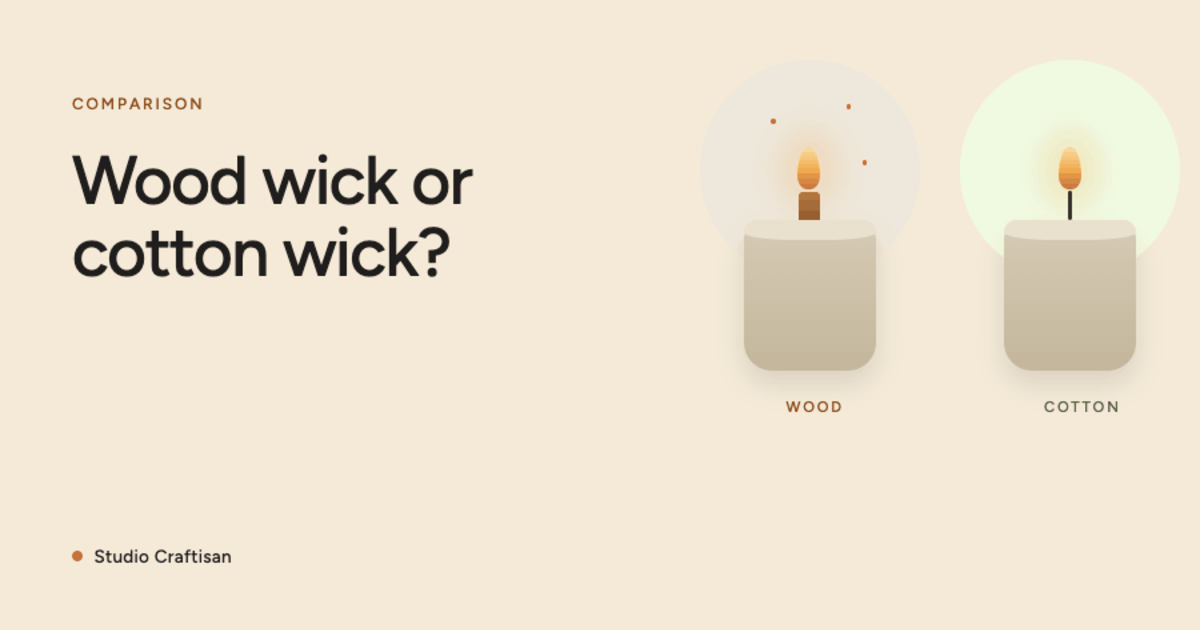
The wick is the heart of a candle. Whatever the vessel, the fragrance or the wax, it is the type and thickness of the wick that decides how a candle burns, how well it throws scent and how long it lasts. The wrong wick will tunnel or soot even the finest soy candle.
There are two main options today: the classic cotton wick, and the wooden wick that has spread quickly in recent years. This guide puts them side by side on burn behaviour, scent throw, sound, maintenance and cost, so you can decide which suits you.
Why the Wick Matters So Much
The wick draws melted wax upwards by capillary action and feeds the flame. That rate of draw determines the candle performance directly.
- Too thin, and the flame stays small, the wax never reaches the edges and a tunnel forms in the middle.
- Too thick, and the flame grows, the candle burns down fast and produces soot.
- The right wick is strong enough to liquefy the whole surface to the edges on the first burn, and restrained enough not to produce an uncontrolled flame.
The correct wick changes with vessel diameter, wax type and fragrance load, which is why makers test wicks separately for every design.
What Is a Wooden Wick?
A wooden wick is a flat strip cut from cherry, maple or birch, sometimes two layers bonded together. It sits in a metal base and stands upright in the wax.
- It crackles softly as it burns. The sound recalls a fireplace and makes an evening ritual noticeably more atmospheric.
- It produces a horizontal flame, which melts the surface more evenly and reduces the risk of tunnelling.
- The wide melt pool spreads fragrance faster and more evenly through a room.
- Cared for properly, it leaves less soot.
- It looks clean and natural, and sits especially well with concrete and ceramic vessels.
The drawback: lighting it takes a little patience. The flame can take a few seconds to settle, and a wick left too long may go out.
What Is a Cotton Wick?
A cotton wick is braided from cotton threads. It is the oldest and most widely used standard in candle making.
- It lights easily and rarely goes out, which makes it the most practical choice for everyday use.
- It gives a tall, vertical flame: the classic candle look.
- It comes in a very wide range of thicknesses for every vessel diameter and wax type, so fine tuning is easy.
- It costs noticeably less than a wooden wick.
- It burns silently, which suits anyone who would rather not hear the candle.
The drawback: if the burnt tip is not trimmed regularly it mushrooms, the flame grows and soot appears. It is also more prone to tunnelling than a wooden wick in narrow vessels.
Side by Side
- Sound: wooden wick crackles softly, cotton wick is silent.
- Flame shape: wooden is horizontal and wide, cotton is vertical and tall.
- Scent throw: wooden spreads faster thanks to the wide melt pool, cotton spreads more gradually.
- Tunnelling risk: lower with wooden, variable with cotton depending on vessel width.
- Ease of lighting: cotton is clearly easier.
- Maintenance: wooden is snapped off with your fingers, cotton is trimmed with scissors.
- Soot: both burn clean when maintained; a neglected cotton wick sooths more.
- Cost: cotton is more economical.
- Look: wooden is natural and minimalist, cotton is classic.
Which One Is Right for You?
It comes down to what you want from the candle.
- If you light candles as part of an evening wind-down, the sound and the wide pool of light genuinely add something: wooden wick.
- If you want to light it quickly for scent, and silence matters: cotton wick.
- If you use wide concrete or bowl-shaped vessels: wooden wick melts more evenly.
- If you want a long burn in a narrow, tall vessel: cotton wick suits better.
- If there are children or pets at home: the lower flame of a wooden wick is a modest advantage.
At Studio Craftisan we use wooden wicks across most of our collection; in concrete vessels in particular they give a noticeably better melt balance and scent throw. For some designs we choose cotton, depending on the shape of the vessel.
Wick Care: Rules That Apply to Both
- On the first burn, wait until the top surface liquefies fully to the edges. This sets the memory of the candle.
- Clean the burnt tip before every burn and leave about 5 mm.
- Never burn for more than 4 hours at a stretch.
- If the flame flickers or soots, the wick is too long; extinguish and trim.
- If a wooden wick keeps going out, it is probably too long; bring it down to about 3 mm.
Wick Size and Container Diameter
Wick thickness follows the width of the container, not the other way around. As the diameter grows, the wick has more surface area to melt, and a size that works well in a small jar will underperform in a wide bowl. Every mold in the workshop gets tested on its own, but a rough guide holds across most of them.
- 6-7 cm diameter: small jars and single-serve bowls need only one thin wick, roughly 9-11 mm for wood or a fine braid for cotton.
- 8-9 cm diameter: mid-size concrete bowls usually take one medium wick, around 13-15 mm; a denser wax calls for two thin wicks instead of one thicker one.
- 10 cm and above: wide bowls rarely melt evenly with a single wick, so two wicks become the standard choice at this size.
Two signs point to the wrong size. If the melt pool still hasn't reached the edge a few hours into the first burn, the wick is too thin for the container. If the flame looks oversized and the outside of the vessel gets too hot to touch, the wick is too thick. Either way, the fix is resizing the wick to the container, not switching wick material. Depth matters too: two bowls with the same diameter can need different wick counts if one is noticeably deeper, since the flame has more wax mass to keep warm.
Wick Thickness, Burn Time, and Cost per Hour
A thicker wick draws more wax per hour, which shortens total burn time. In a 200-gram soy candle, for example, a single thin wick typically burns for 42-45 hours, while the same wax with two wicks burns down closer to 30-33 hours. The trade-off is scent strength: a wider melt pool releases fragrance faster and more noticeably, even though the candle empties sooner.
Neither option is objectively better — it depends on whether you want a long, gently scented burn or a shorter one with a stronger throw. If the candle costs the same regardless of wick count, the single-wick version ends up cheaper per hour simply because it lasts longer. We factor this difference in when pairing wicks with containers, aiming for a burn that stays safe and keeps its scent through to the last few millimeters of wax.
Frequently Asked Questions
Is a wooden wick healthier?
The wax matters far more than the wick. Lead-free cotton and wooden wicks are both safe; the real difference is between paraffin and soy wax.
Is the crackling sound distracting?
It is very soft and only audible in a quiet room. With a television or music on, you will not notice it.
Why does my wooden wick keep going out?
Almost always because it is too long. Snap off the burnt part to leave 3-5 mm and hold the flame close to the base of the wick.
Why does my cotton wick soot?
The tip has mushroomed and grown too long. Trimming before every burn solves it completely. Also avoid burning in a draught.
Can I change the wick myself?
Not once the candle is poured. But when you clean the vessel and pour a new candle, you can use whichever wick you prefer.
Related Reading
- Wooden Wick Candles: Benefits and the Crackling Sound
- Candle Care: 5 Rules to Prevent Tunnelling and Soot
- How to Clean a Concrete Candle and Turn It Into a Planter
You Might Also Like
The Candles Behind This Guide
All are made by hand in Izmir from 100% natural soy wax with wooden wicks:
- Bohem Rüzgarı: warm, lightly spiced notes.
- Gece Fırtınası: deep woody and amber notes.
- Saf Pamuk: clean cotton and fresh laundry.
For more options, browse our wooden wick candles and soy candles pages.