What Is a Concrete Candle? Benefits of Concrete Jar Candles
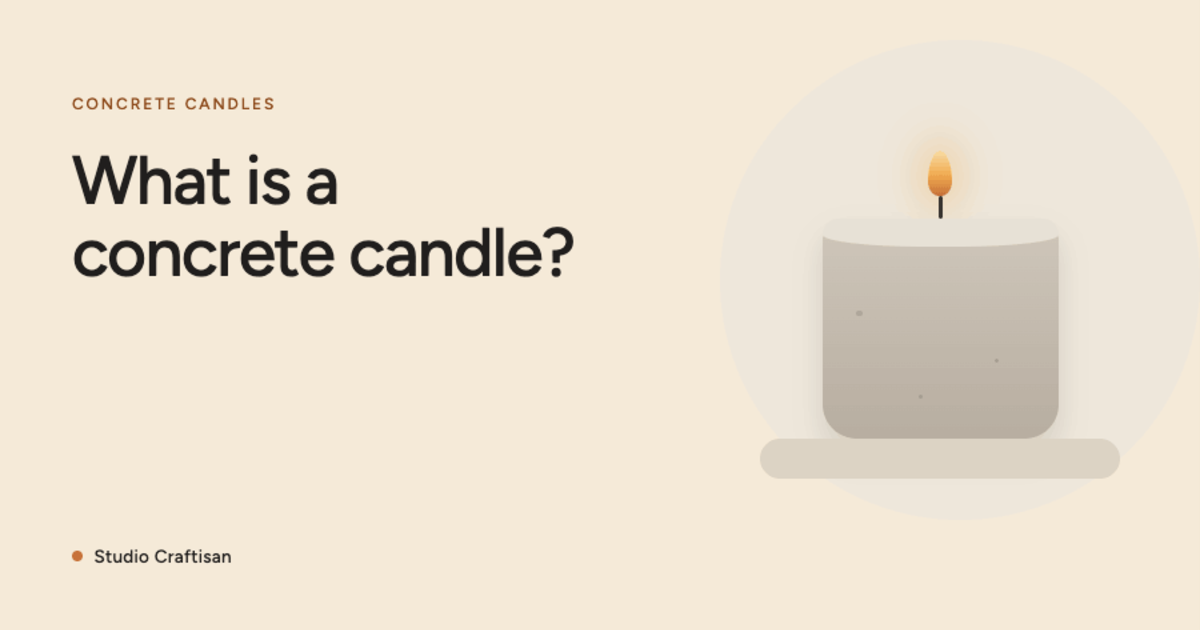
A concrete candle is a hand-poured product made by pouring candle wax into a concrete (cement-based) vessel, used for both lighting and decoration. Unlike glass or metal containers, concrete has become a favorite in home decor thanks to its natural texture, matte surface and industrial-minimalist look.
How Are Concrete Candles Made?
Each concrete vessel is cast by hand, one at a time. After the vessel cures, natural wax (usually soy) and a wick are placed inside. Because the process is entirely handmade, the surface texture, tone and details of every piece differ slightly — and these small variations make each candle unique.
Benefits of Concrete Candles
- Durability: The concrete vessel is heat-resistant and can be reused as a planter, pen holder or trinket dish once the candle is finished.
- Aesthetics: Its matte, natural surface fits modern and minimalist decor perfectly.
- Stability: Its weight keeps it from tipping over, offering safe use.
- Sustainability: Being reusable, it is more eco-friendly than single-use products.
Who Are They Ideal For?
Concrete candles are an ideal choice for those who love a simple, elegant atmosphere, anyone looking for a gift, and people who want to add a natural touch to their space. Combined with soy wax and a wooden wick, they offer both a clean burn and a calming experience.
At Studio Craftisan, we hand-pour all of our candles with care in İzmir Seferihisar. Explore our concrete candle collection with customizable color and scent options.
How Is a Concrete Candle Different from a Glass Candle?
Concrete and glass behave in very different ways even when they hold the exact same candle. Concrete has low thermal conductivity, so while the wick is burning, the outside of the vessel stays comfortably cool to the touch, usually somewhere around 30-40°C. Thin glass jars are a different story: the area right above the flame can climb to 60-70°C, and picking up the jar near its base can be genuinely uncomfortable. That makes concrete a more practical choice for coffee tables, kids' rooms, or anywhere a candle is left burning for a long stretch.
Scent throw follows a different pattern too. Concrete's porous surface absorbs a small amount of fragrance as it burns, so the scent tends to build gradually rather than hitting you all at once. Glass doesn't interact with the scent at all, so fragrance is released at full strength from the first few minutes. Neither is objectively better — if you want a strong scent immediately, glass delivers that; if you prefer a softer, more gradual fill, concrete does the job.
Weight and durability show the clearest contrast. A Studio Craftisan concrete vessel typically weighs 400-800 grams depending on size, compared to 150-300 grams for a standard glass jar candle. That extra weight keeps the concrete jar planted on a table or a breezy patio corner instead of tipping over. Concrete is also far more resistant to drops and scratches — a glass jar that falls usually shatters, while a dropped concrete vessel is more likely to end up with a small surface mark than a full break.
Caring for and Cleaning Your Concrete Vessel
Day-to-day care is straightforward. Dust it off with a dry or slightly damp cloth; skip abrasive sponges or stiff brushes, since they can wear down the natural surface texture over time. If wax or oil drips onto the outside of the vessel, wipe it up as soon as you can — concrete is porous, so a stain left sitting for a few hours has a much better chance of soaking in and becoming permanent.
Moisture is the thing to actually watch for. If the vessel sits for a long time on a wet surface — a bathroom counter with standing water, for example — that moisture can work its way into the concrete's capillary pores and eventually show up as faint discoloration or a slight musty smell. A simple felt pad underneath and drying the base regularly is usually enough to avoid this.
Outdoor use comes up often. A concrete jar is fine on a patio or balcony for short stretches, but it shouldn't be left out through repeated rain or winter freezes — water trapped in the pores expands when it freezes and can lead to hairline cracking over time. Prolonged direct sun can also cause slight fading. In short: outdoor use is fine, but treat it as something to bring in when the weather turns rather than a permanent outdoor fixture.
Reusing the Vessel Once the Candle Is Gone
One of the best things about a concrete candle is that the jar doesn't have to end up in the trash once the wax is spent. Getting the leftover wax out and cleaning the vessel takes just a few steps.
- Put the empty jar in the freezer for 20-30 minutes; the cold makes the wax contract and pull away from the concrete surface on its own.
- Use a dull knife or the back of a spoon to gently lift out the wax remnant, being careful not to scratch the concrete.
- Wipe out any remaining oily residue with warm soapy water and a soft cloth, then rinse.
- Turn the jar upside down and let it air-dry fully for about 24 hours before putting it to a new use — starting a new use while it's still damp is what leads to the moisture issues mentioned above.
Once clean, the vessel is ready for a second life. Smaller jars work well as pen holders, makeup brush stands, or a catch-all for cotton swabs in the bathroom. Medium and larger ones can become planters for low-water plants like succulents or small cacti — just add a couple of centimeters of gravel or perlite at the bottom first, and since there's no drainage hole, water sparingly and leave room for runoff. Some customers simply use the empty jar as a small tray for rings, earrings, or loose change by the door.
What to Look for When Choosing a Concrete Candle
A few technical details make a real difference in how long a concrete candle lasts and how well it burns.
- Wall thickness: a vessel with walls at least 8-10 mm thick handles impact and thermal stress much better; jars cast too thin are more prone to hairline cracks over time.
- Wick count and type: for jars wider than about 8 cm, two wicks give a more even melt pool than one; wood wicks burn with a light crackle, while cotton wicks give a calmer, smoke-free flame.
- Wax type: soy wax burns cooler and slower than paraffin, leaves no soot, and creates a more even melt pool inside the jar; Studio Craftisan uses 100% soy wax across the line.
- Weight and burn time: a 150-180 gram candle typically burns for 30-35 hours, while a 250-300 gram candle runs closer to 50-60 hours; checking burn time per gram before buying is the clearest way to compare value across candles.
Frequently Asked Questions
Does the concrete vessel get hot while burning, and can you hold it?
Yes, but only mildly. Thanks to concrete's low thermal conductivity, the outer surface generally stays around 30-40°C — warm, but not uncomfortable to touch. The hottest spot is always the rim closest to the flame; the base stays much closer to room temperature.
Does a concrete candle jar crack?
Not under normal use. Cracking is almost never caused by heat from the flame itself — it's far more often the result of dropping the jar on a hard surface or exposing it to repeated freeze-thaw cycles outdoors. Trimming the wick to 5-6 mm before each burn and avoiding marathon burns that use up the whole candle in one sitting also helps both the wax and the vessel last longer.
Can a concrete candle be used outdoors, and is it waterproof?
Short-term outdoor use — on a patio table or balcony — is perfectly fine. Concrete isn't fully waterproof, though: prolonged exposure to rain, snowmelt, or freezing temperatures can let water seep into the pores and eventually lead to fine cracking. The safest approach is to bring the jar indoors during wet or cold spells rather than leaving it out year-round.
Why is a concrete candle so heavy, and does that cause shipping problems?
Concrete is simply denser than glass or ceramic, so the same size jar weighs two to three times more — that's a natural property of the material, not a defect. If anything, it works in shipping's favor: concrete is far more impact-resistant than glass, so the risk of breakage is low. The main thing that matters for packaging is reinforcing the corners of the box.
How do you get the leftover wax out of the bottom of the jar?
The easiest method is to freeze the empty jar for 20-30 minutes; the wax contracts in the cold and lifts away from the concrete, so it can be scooped out with a dull spoon. Alternatively, pour a small amount of hot water into the jar and let it sit for a few minutes to soften the residue, then wash the jar with soapy water and dry it thoroughly.
You Might Also Like
The Candles Behind This Guide
All are made by hand in Izmir from 100% natural soy wax with wooden wicks:
- Gece Fırtınası: deep woody and amber notes.
- Taş Sessizliği: mineral and sandalwood.
- İskandinav Odunu: Scandinavian simplicity, woody notes.
For more options, browse our concrete candles and soy candles pages.