Concrete Candle vs Glass Candle: Which Vessel Should You Choose?
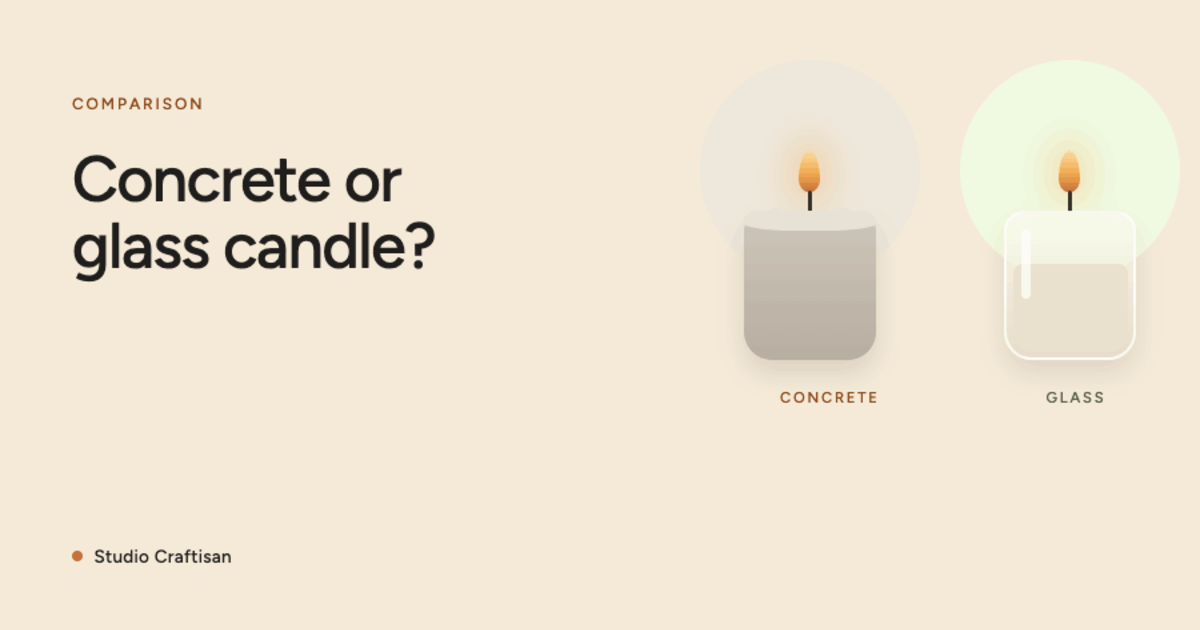
The concrete candle versus glass candle question comes up for almost everyone who buys candles. Both vessels do the same job: they hold the wax safely while it burns. The difference shows in how the vessel behaves, how long it lasts, and what you are left with once the candle is finished.
In this guide we compare the two on weight, heat tolerance, looks, care, reuse and price. The goal is not to crown a winner, but to help you see which one suits your home, your habits and your budget.
The Core Difference Between Concrete and Glass Candles
A glass candle is poured into a clear or frosted glass jar, so you can see the wax level, the melt pool and the wick from outside. A concrete candle is poured into a cement-based vessel with a matte, textured and heavy surface. You cannot see inside, so you judge how much wax is left by looking from above.
The vessel does not change the wax. The same soy wax and fragrance oil burn the same way in either. The container mainly affects convenience, decorative value and what you can do with it afterwards. So ask yourself: do you want the vessel to give you more while the candle burns, or after it is finished?
Looks and Decor: Where Does Each One Fit?
Glass is neutral and clean. It suits classic, minimalist or colourful interiors, and the flame glows through the jar in the evening. The colour of the wax shows through too, which adds its own decorative effect.
Concrete is a decor object in its own right. On a shelf, desk or coffee table in an industrial, Scandinavian or natural-toned room, it stays part of the scene even when unlit. Each vessel can show small tonal shifts and pores, which is part of the material, not a flaw, and makes every piece slightly different. You can browse every option in our concrete candles category.
Heat Tolerance and Safety
A well-made glass jar is chosen to tolerate burning temperatures. Thin or cracked glass can still fail with sudden temperature change, so avoid burning on a cold windowsill, moving the candle while lit, or burning down to the last half centimetre of wax.
Concrete carries heat differently. Its thick wall heats up more slowly and tolerates thermal shock well, but it is heavy and can break if dropped. The rules are the same for both: use a flat, heat-resistant surface, never leave a flame unattended, and keep it away from children and pets. Leaving at least fifteen centimetres of clear space around a burning candle is a good habit.
Burn Performance: What Does the Vessel Change?
Many people assume concrete burns longer or glass throws scent better. In practice, burn time depends on the amount of wax, the wick size and how you burn it. Letting the melt pool reach the edges on the first burn is the most important step against tunnelling; we explain it in why candles tunnel.
Vessel diameter plays an indirect role. In a wide concrete bowl the melt pool spreads further and scent can fill a room faster. In a narrow, tall glass jar the flame sits deeper and the pool forms more slowly. The difference comes from shape, not material, so look at diameter and height when comparing.
Which Room Suits Which Vessel?
In calm, decor-led spaces such as a living room or study, a concrete vessel works as both scent and object. Its weight makes it hard to knock over on coffee tables and shelves, and its matte surface hides fingerprints and dust, so upkeep is easy.
In bedrooms and bathrooms a glass candle is often more practical. It is light enough to carry between rooms, and seeing the wax level helps you remember to put it out before sleep. In humid rooms glass wipes clean more easily; concrete is porous and can stain where it stays wet.
In the kitchen or at the dining table, scent should not compete with food. A light, clean fragrance burned low and away from the centre of the table works best, whichever vessel you choose. Where you place the candle shapes the experience as much as the vessel does.
Weight, Handling and Gifting
Concrete vessels are noticeably heavier than glass of similar volume. That weight keeps them steady on a table but needs care in shipping and carrying. Glass is lighter but sensitive to impact; both ship well when packed properly.
As a gift, concrete feels distinctive and keeps its value after use, while glass is a safe, universal choice. Compare options on our candle gifts page; dark, warm scents such as Gece Fırtınası look especially good in a concrete vessel.
After the Candle: Care and Reuse
This is where the two differ most. A cleaned concrete vessel becomes a small planter, jewellery tray, pen holder or succulent pot. Glass can also be cleaned and reused for spices, brushes or cotton buds, but for most people the concrete vessel keeps a longer decorative life.
For cleaning, don't scrape out leftover wax; soften it with warm water and wipe it away. Freezing and chipping risks cracking a glass jar. On concrete, avoid hard brushes and abrasive cleaners, which can scratch the matte surface. For how wick choice changes the burn, see our wooden wick vs cotton wick comparison.
Price and Value
Concrete vessels take more hands-on work: mixing, pouring, curing and sanding. A concrete candle is therefore usually priced above a glass candle of similar volume. It makes sense to weigh the price against what the vessel does after the candle, not only against the wax; a vessel you reuse as a planter or tray is one you don't buy separately. Other price factors are covered in our soy candle price guide.
Which Should You Choose?
- If you want a decor piece and plan to reuse the vessel, choose concrete.
- If you want to see the wax level and prefer a light, simple vessel, choose glass.
- For gifts, match the recipient's taste; a neutral-toned concrete vessel is a good middle ground.
- If scent comes first, the vessel is secondary; pick by notes in the scented candles category. Lavanta Bulutu and Taş Sessizliği are good starting points.
The wax matters as much as the vessel; look at the natural options in our soy candles category, and see how to extend soy candle burn time.
Frequently Asked Questions
Does a concrete candle burn longer than a glass candle?
Burn time depends on the amount of wax, wick size and how you burn it, not the vessel. Don't expect a meaningful difference at the same wax volume and wick.
Are concrete candles safe?
Yes, when used correctly. Place them on a flat, heat-resistant surface, don't move them while lit and never leave them unattended. The side walls can be warm while burning, so let a freshly extinguished candle cool before touching it.
Can a glass candle jar crack?
Poor-quality or cracked glass can. Avoid cold surfaces, burning to the very bottom and sudden temperature changes.
What can I use a concrete vessel for afterwards?
Once cleaned, a small planter, jewellery tray, pen holder or decorative bowl. Plants that need little water, such as succulents, suit it best.
Does scent strength change with the vessel?
No. Scent strength depends on fragrance load, wax type and wick, not the container. Vessel diameter can have a small indirect effect through the size of the melt pool.
The Candles Behind This Guide
All are made by hand in Izmir from 100% natural soy wax with wooden wicks:
- Gece Fırtınası: deep woody and amber notes.
- Taş Sessizliği: mineral and sandalwood.
- Lavanta Bulutu: pure, soothing lavender.
For more options, browse our concrete candles and scented candles pages.
Choosing a candle as a gift? Read our candle gift guide.